


- ✓ Schnelle Auslieferung
- ✓ Wein -und Spirituosen aus aller Welt
- ✓ Riesige Wein und Markenauswahl
- ✓ der Nr.1 Genuss-Marktplatz

| 1% | 2 | 3 |
| 4 | 5 | 6 |
| 8 | 12 | 18 |

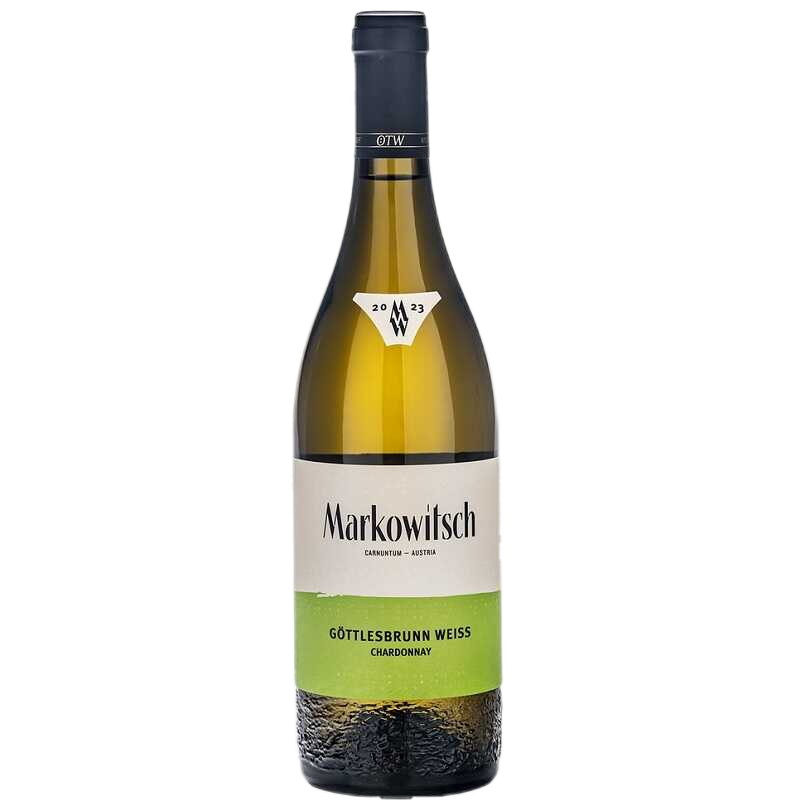
Chardonnay von schottriger. lehmiger Oberboden mit kalkreichem Untergrund selektive Handlese von Anfang bis September Spontangärung in großen Holzfässern aus französicher Eiche bei 20-25°C 13,1 vol Notizen des Weinguts: Ein Wein mit vielen Gesichtern. Im Duft ist er zunächst sehr intensiv von tropischen Früchten und sogar von Zimt geprägt, und man würde einen mächtigen Gaumen erwarten. Doch dann zeigt er sich sehr frisch, sogar fruchtig und präzise, um schließlich mit einem sehr aromatischen Abgang zu enden. Der perfekte Begleiter zu Pasta mit Gemüse-, Pilz
- oder Trüffelfüllung. Außerdem zu gebratenem Fisch und zu gekochtem Fleisch (Tafelspitz).
- 91-93 Punkte FALSTAFF, Peter Moser: Helles Gelbgrün, silberfarbene Reflexe. Zarte Nuancen von gelbem Kernobst, nach frischem Apfel, ein Hauch von Mango, Orangenzesten, mineralischer Touch. Mittlerer Körper, frischer Säurebogen, feine Extraktsüße, zitronig-lebendig im Abgang, anregender Stil.
- 91 Punkte VINOUS, Anne Krebiehl MW (112025): The 2023 Chardonnay Göttlesbrunn Weiss was picked in the two Erste Lagen Haidacker and Altenberg, cooler gravelly sites. Grapes were whole-bunch pressed, sedimented overnight and fermented spontaneously in a 2,500-liter Austrian oak barrel, where the wine stayed for a year on gross lees. The nose is creamy, tender, supple and fruity. The palate is sprightly, fresh, full of energy and elan, absolutely bright with lemon and vivid with slender creaminess, creating finesse with crunchy, bright freshness. A lovely lemon echo lasts. (Bone-dry) 2026-2035.
- VINARIA: Pfeffrig, ein Hauch von Reduktion, geröstete Nüsse, die Frucht noch zurückhaltend, ein wenig Ananas saftiger Beginn, vollmundig, viel Grapefruits am Gaumen, sehr straff nach hinten, mittleres Finish.
- 90 Punkte Parkers WINE ADVOCATE, S. Reinhardt (072025): The 2023 Göttlesbrunn Chardonnay is from 10
- to 40-year-old vines in the crus Haidacker and Altenberg and opens with a very elegant, refined and aromatic bouquet of ripe yellow melons intertwined with delicate saline nuances. Medium-bodied, round and lush as well as precise and savory on the finish, this is a stimulating fresh and saline Chardonnay with ripe pear and melon aromas and good length. 13 alcohol. Tasted as a sample in June 2025. 2025-2031. Gerhard Markowitsch and his family cultivate a total of 65 hectares of vines in the communes of Höflein, Göttlesbrunn and Prellenkirchen, all of which belong to the Carnuntum region. This forms the link, so to speak, between the areas along the Danube in Lower Austria and Burgenland. Lake Neusiedl in Burgenland lies 12 kilometers to the south, while the Danube is only two kilometers away. However, its primeval bed still shapes the soils of the Districtus Austriae Controllatus (DAC) region today, especially in Höflein and Göttlesbrunn, where the vineyards at the Brucker Pforte are like the gently undulating waves of an ocean, sometimes sloping south, sometimes north, from altitudes of up to 280 meters. It was not a sea but the primeval Danube River that created this landscape and left behind pebbles that are sometimes white, sometimes reddish, sometimes more and sometimes less numerous. Theyre never as large as those in Châteauneuf-du-Pape on the Rhône River but still numerous enough to warm the loam and clay soils, even in the evening, because they take the warmth of the day a little into the night before the obligatory winds cool the vines and grapes in this wind tunnel created as if by venturi. This effect, which is intensified where the plots border the Maria Ellender Forest, such as with Markowitsch's excellent Chardonnay from the Schüttenberg vineyard, gives the estate's white and red wines a fresh elegance despite their fruity intensity. The situation on the Spitzerberg, a foothill of the Carpathian Mountains in Prellenkirchen further east, is differentnot in terms of the wind, which is constant here and has attracted not only a sports airport with gliders but also countless wind turbines, which give the otherwise flat landscape between the Danube and the Leitha Mountains a futuristictoday one has to say contemporaryrhythm, but the sandy soils are lighter and warmer than in Göttlesbrunn, and the wines are more delicate and richly finessed, as they come from the best parts of the Spitzerberg. Markowitsch does not cultivate the vines on the Spitzerberg himself he has leasing and cultivation contracts. However, the family does own the huge machine that blows on both sides of the grape zone in June during the end of flowering to remove the leaves and make the later grapes looser and therefore more resistant to rot. This gentle monster costs 70,000 euros (or about $89,000 USD) and travels through and over the rows of vines on surprisingly light soles. Since the 2023 vintage, all vineyards for village wines and single-vineyard wines have been certified organic, and from the 2024 vintage, regional wines will also be certified. A good third of Markowitsch's vineyards are planted with white varieties, especially Chardonnay, but also Weissburgunder (a.k.a. Pinot Blanc) and Grüner Veltliner. Blauer Zweigelt traditionally dominates the red varieties. Markowitsch's Höflein Ried Kirchweingarten is considered by renowned fellow winemakers to be the best Zweigelt in Austria. Markowitsch also grows Blaufränkisch, even on the Spitzerberg. The Pinot Noir Reserve from the cool Scheibner vineyard is likely to be more internationally relevant than the two Austrian wines. In Austria, it is one of the finest, freshest and most long-lived Pinot red wines. It is never left standing. It has limestone finesse, fruit intensity and structure and comes closest to Dorli Muhr's Spitzerberg Blaufränkisch red wines. Incidentally, she vinified her first wines at Markowitsch in 2002, together with Dirk van der Niepoort, and remained loyal to this garage winery for years. Markowitsch has made a name for itself over 25 years with its red wine cuvées, above all thanks to the Merlot, which, on its own, would taste round and elegant but somewhat lacking in tension. For this reason, Zweigelt and Blaufränkisch are added to freshen up and structure the wine, which is called Ried Rosenberg but without a varietal designation. The cuvée M1, Markowitsch's most spectacular red wine, is an assemblage of Merlot and Blaufränkisch with a kiss of Cabernet Franc. It impresses with its elegant fullness, structured intensity and length. The 2019 M1 is the best wine I have tasted from Markowitsch in almost 20 years and one of the best red wines in Austria. Gerhard and Christine's daughter Johanna has been with the business for around 10 years. Self-confident, clear, strong-willed, pragmatic and future-proof with a lot of energy, she has experience in both trade and viticulture and also understands marketing. Johanna's younger sister Helene is 25 years old and has also been working in the family business for a year. She trained at the Keller winery in Rheinhessen, among others. Shes also not a bad actress. How does the family divide up the work? Everyone is allowed and does everything. Its spontaneous, wild, sometimes even loud and sometimes certainly tense, but that's a good thing. In any case, they have agreed on the winemaking. And they have also developed their own wine bottles, each of which looks as individually asymmetrical as if it had been mouth-blown 100 years ago. The labels with their retro typography also exude the flair of the good old days. The white wines are gently pressed as whole clusters after two to two and a half hours, like Crémant, to preserve the acidity. Malolactic fermentation is mandatory because there is hardly any malic acid left in the grapes when they are harvested. On the other hand, Markowitsch prefers to harvest a day early rather than a day late. After pressing, the must is left to settle overnight in a settling tank, then transferred to Burgundy pièces (Chardonnay only), doppelstücks (2,400-liter oval oak vats), concrete eggs or amphorae. The young wine matures on the lees for a year before the blend is transferred to steel tanks for several months. Bottling takes place in June or early July. All the white wines are now closed with Diam corks. The red wines are destemmed and each single vineyard is fermented separately in vats, fermentation tanks or always-full tanks, with the cap being punched down once a day to keep it moist. The cuvaison lasts around 14 to 17 days. After pressing, the wines are transferred to 500-liter Stockinger barrels or stücks (1,200-liter oval oak vats Blaufränkisch only) and aged for 15 to 16 months. Only the single-vineyard wines, including the Pinot Noir Reserve, are bottled under natural corks, whereas all the rest age under Diam corks. Markowitsch's wines are based on ripe, healthy, fleshy fruit that does not fade on the palate and does not deny its soil and climate origins but does not overshadow them either. The wines are dense, powerful and long-lasting, with always ripe tannins. Above all, however, they are worth drinking when mature, i.e., at 10 years of age or older. ;
| Durchschnittliche Nährwerte pro 100 g/ml | |
| Brennwert | 100 kcal |
| Fett | < 0,25 g |
| Salz | < 0,03 g |
Produkt ab 18! Dieses Produkt enthält Alkohol und darf nicht an Personen unter dem gesetzlichen Mindestalter abgegeben werden. Eine Lieferung an Minderjährige ist nicht möglich. Mit Ihrer Bestellung bestätigen Sie, dass Sie das gesetzlich vorgeschriebene Mindestalter haben. Bitte seien Sie verantwortungsvoll im Umgang mit diesem Artikel. Weitere Informationen unter kenn-dein-limit.info.
Bitte melden Sie sich an, um eine Bewertung abzugeben.
Anmelden

 Österreich
  Argentinien
(71)
Argentinien
(71)  Australien
(105)
Australien
(105)  Chile
(108)
Chile
(108)  Deutschland
(1270)
Deutschland
(1270)  England
(61)
England
(61)
 Frankreich
(2240)
Frankreich
(2240)  Italien
(2252)
Italien
(2252)  Neuseeland
(65)
Neuseeland
(65)  Niederlande
(31)
Niederlande
(31)
 Portugal
(207)
Portugal
(207)  Spanien
(873)
Spanien
(873)  Südafrika
(267)
Südafrika
(267)  USA
(999)
USA
(999)